×

Products

ERW Steel Tubes Manufacturer in India


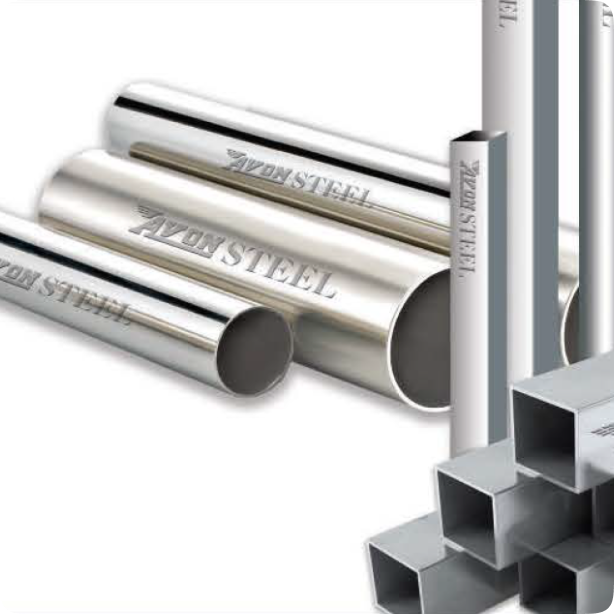
ERW steel tubes by Avon Steel Industries
Photo: ERW steel tubes by Avon Steel Industries

ERW Steel Tubes

Avon Steel is a leading manufacturer of high-quality Electric Resistance Welded (ERW) black tubes in Ludhiana, Punjab, delivering strength, precision and performance across industries. Our ERW black tube plant, which also produces ERW steel pipe, is equipped with five state-of-the-art, high-speed ERW pipe mills, ensuring consistency in every product. We manufacture ERW steel tubes in the following dimensions:

+91-161-5210100  |  WhatsApp +91-99148-08900

Product range and quick specification

  • Outer Diameter (OD): from 21 mm to 273.1 mm
  • Thickness: from 1.20 mm to 8.0 mm
  • Square Hollow Sections (SHS): 16 x 16 mm to 200 x 200 mm
  • Length: from 3.5 m to 7.5 m
  • Rectangular Hollow Sections (RHS): 26 x 13 mm to 250 x 150 mm
  • Standards: IS 4923, IS 1161, IS 3601, IS 1239, EN 10219, EN 39, ASTM A 500
  • Finish: Black (as made). Need another finish? Ask us.

What are ERW Steel Tubes?

ERW stands for electric resistance welded. A steel strip is formed into a round tube and its edges are heated by electric current and pressed together, so the seam is welded without filler metal. ERW steel pipe costs less than seamless pipe and is accurate in size. Our ERW tubes are supplied as black pipe (uncoated, as made); for zinc-coated pipe, see our GI pipes, hot-dip galvanized in our own plant.

Why Choose Avon Steel ERW Tubes?

Buy ERW steel tubes and ERW steel pipe directly from the manufacturer in Ludhiana.

High strength & durability

Engineered for long-lasting performance

Five ERW mills, precision manufacturing

Coil to finished length, so size and wall stay consistent batch to batch.

Certified

ISO 9001:2015, BIS licences (IS 4923, 1161, 3601, 1239) and CE marks (EN 10219, EN 39, EN 10255). Conforming to national & international standards.

Versatile applications

From pipelines to structural frameworks

Across India and worldwide

Dealers, fabricators and project buyers.

Seven decades of experience

Part of the Avon Group, which began in 1952.

Get an ERW Steel Tube Quote

Send us your size and thickness and quantity and we will reply with a written quote for ERW steel pipe.

Call +91-161-5210100 or WhatsApp +91-99148-08900, or use the form.
Get an ERW Steel Tube Quote

Applications of ERW Steel Tubes

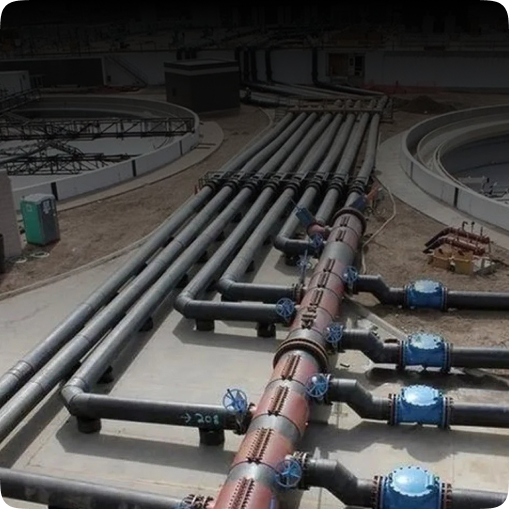
Water Pipeline Systems

Used extensively in:

  • Water mains
  • Plumbing
  • Sewerage systems
  • STPs and WTPs
  • Firefighting lines
  • HVAC systems
  • Industrial water pipelines and plant piping
  • Standards: IS:1239, IS:3589, ASTM A 53, JIS G 3444, EN 10255, EN 10217-1, AS:1074, AS/NZS:1163:2016
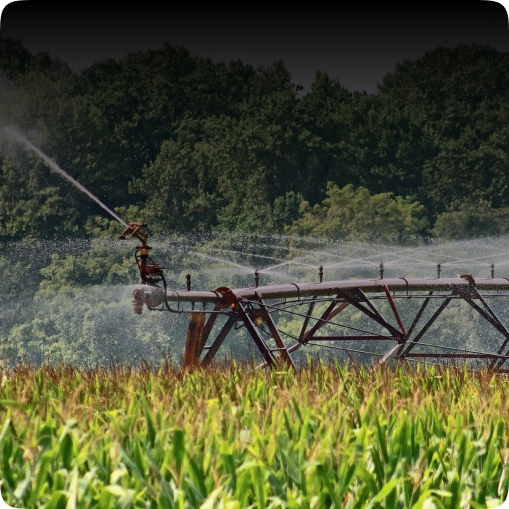
Agriculture & Irrigation

Ideal for:

  • Deep tube-wells
  • Casing pipes
  • Standards: IS:4270
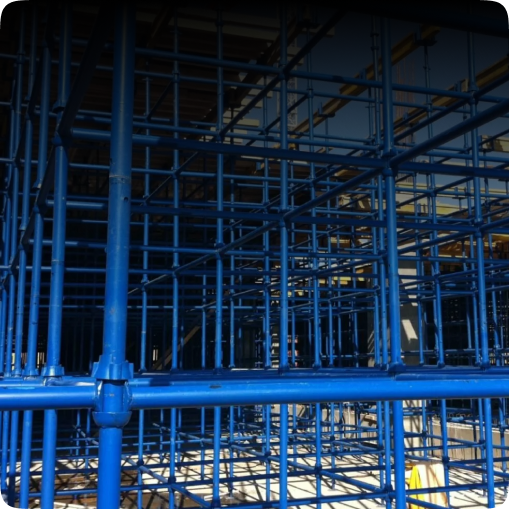
Construction & Infrastructure

Widely used for:

  • Scaffolding
  • Structural frameworks
  • Electrical poles
  • Telecom towers
  • Standards: IS:1161, IS:4923, EN 39, EN 10219 (Part 1 & 2), AS/NZS 1163:2016, ASTM A 500
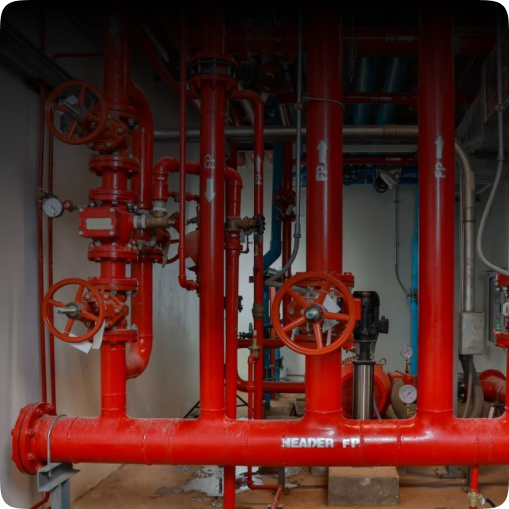
Fire Fighting Systems

Reliable for:

  • Fire protection pipelines
  • Sprinkler systems
  • Standards: ASTM A 53, ASTM A 795, IS:3589, IS:1239
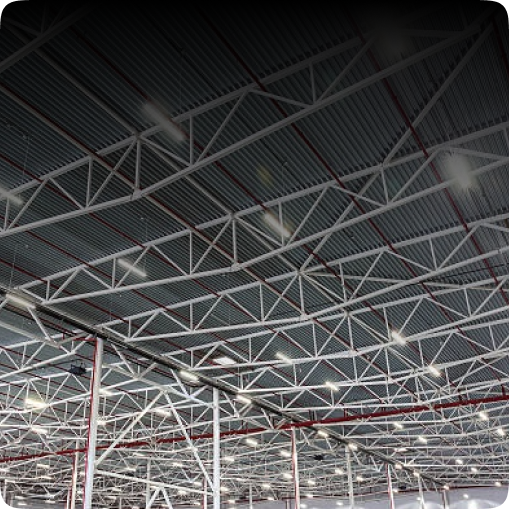
Warehouses, Highways & Industrial Sheds

Perfect for structural and fabrication work in:

  • Warehousing solutions
  • Highway infrastructure
  • Standards: ASTM A 500, EN 10219, IS 4923, AS/NZS 1163, CSA
Other Industrial Applications

Used in:

  • Exhaust piping systems
  • Cold storage facilities
  • LPG cylinder supporting rings
  • Idlers & belt conveyors
  • Swaged poles
  • HVAC systems
  • Standards: IS:1239, IS:9295, IS:1161, IS:2713:1980

ERW Steel Pipe Sizes, Thickness and Weight Chart

Round ERW tubes: theoretical weight, kg per metre

OD (mm), NB, inch 2.0 mm2.6 mm3.2 mm4.0 mm5.0 mm6.0 mm8.0 mm
33.7 (25 NB, 1 inch) 1.561.992.412.933.54--
48.3 (40 NB, 1-1/2 inch) 2.282.933.564.375.34--
60.3 (50 NB, 2 inch) 2.883.704.515.556.828.03-
88.9 (80 NB, 3 inch) 4.295.536.768.3710.3412.2715.96
168.3 (150 NB, 6 inch) 8.2010.6213.0316.2120.1324.0131.62
273.1 (250 NB, 10 inch) 13.3717.3421.3026.5433.0639.5252.30

Theoretical weights, steel density 7.85 g/cm³. Actual weight varies within the standard's tolerance. A dash means the size is not shown here; ask us for availability.

How ERW Tubes Are Made

  1. 1. Coil selected and slit
  2. 2. Strip formed into a tube
  3. 3. High-frequency welding
  4. 4. Weld bead trimmed
  5. 5. Sized: round, square or rectangular
  6. 6. Tubes cut to length
  7. 7. Testing and inspection
  8. 8. Bundling and dispatch

See our ERW black pipe plant on the Infrastructure page.

ERW Pipe vs Seamless Pipe vs GI Pipe

ERW pipe (black)Seamless pipeGI pipe
How it is madeFormed from strip, seam welded. Supplied black (uncoated)Pierced from a solid billetERW or similar pipe with a zinc coating. Avon's GI pipe is hot-dip galvanized.
Typical useStructural, water, mechanicalVery high pressureWater, fire, outdoor
CostLowerHigherHigher than black ERW

Standards and Dimension Charts

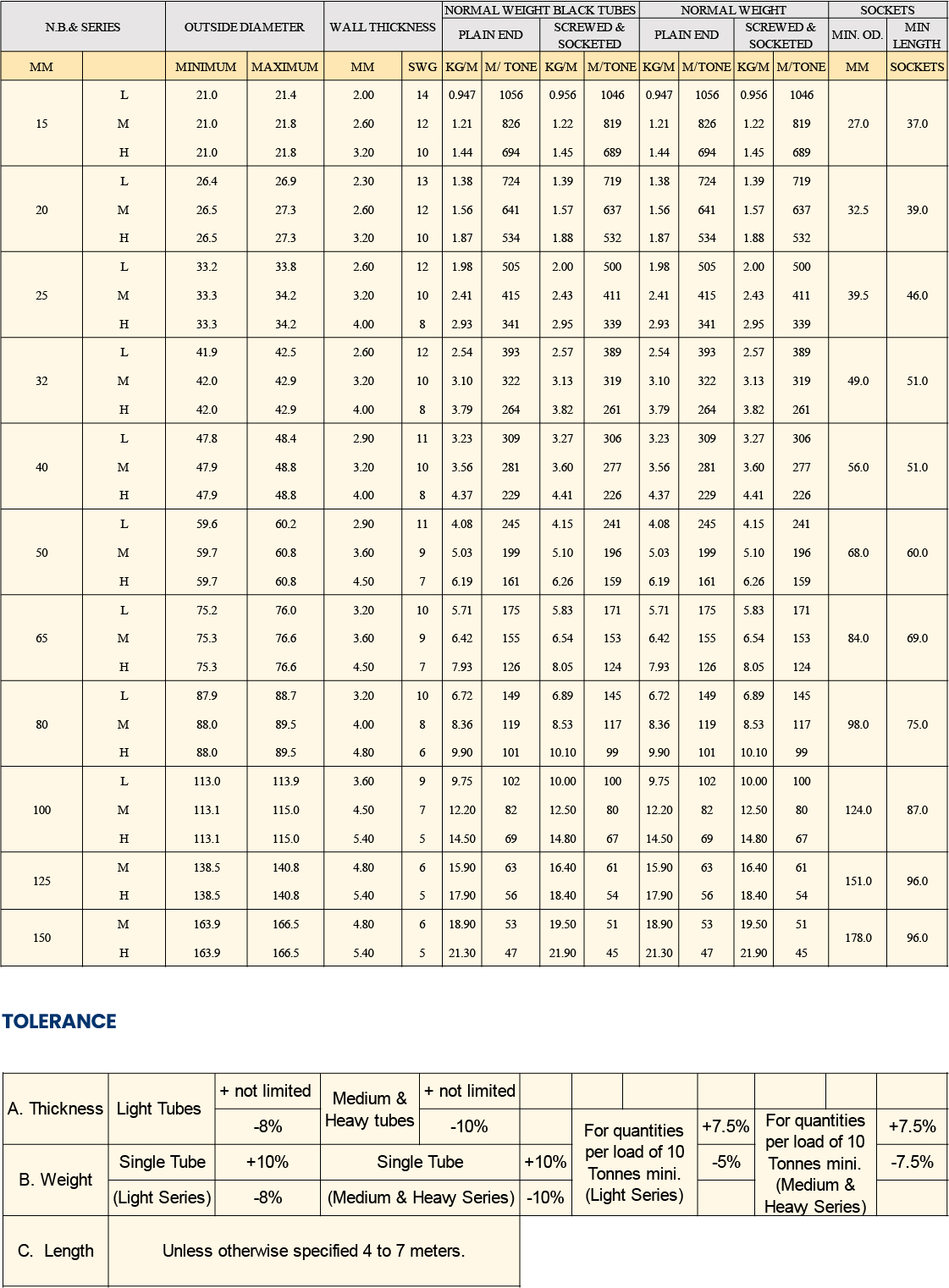
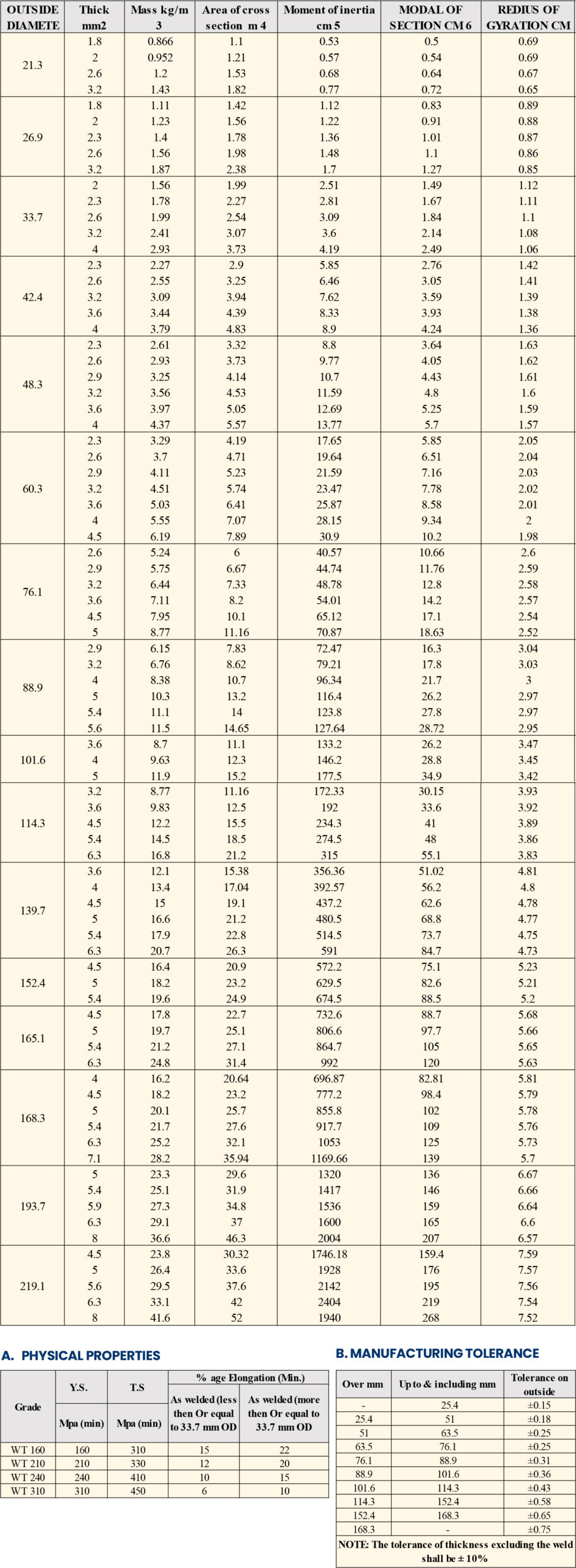
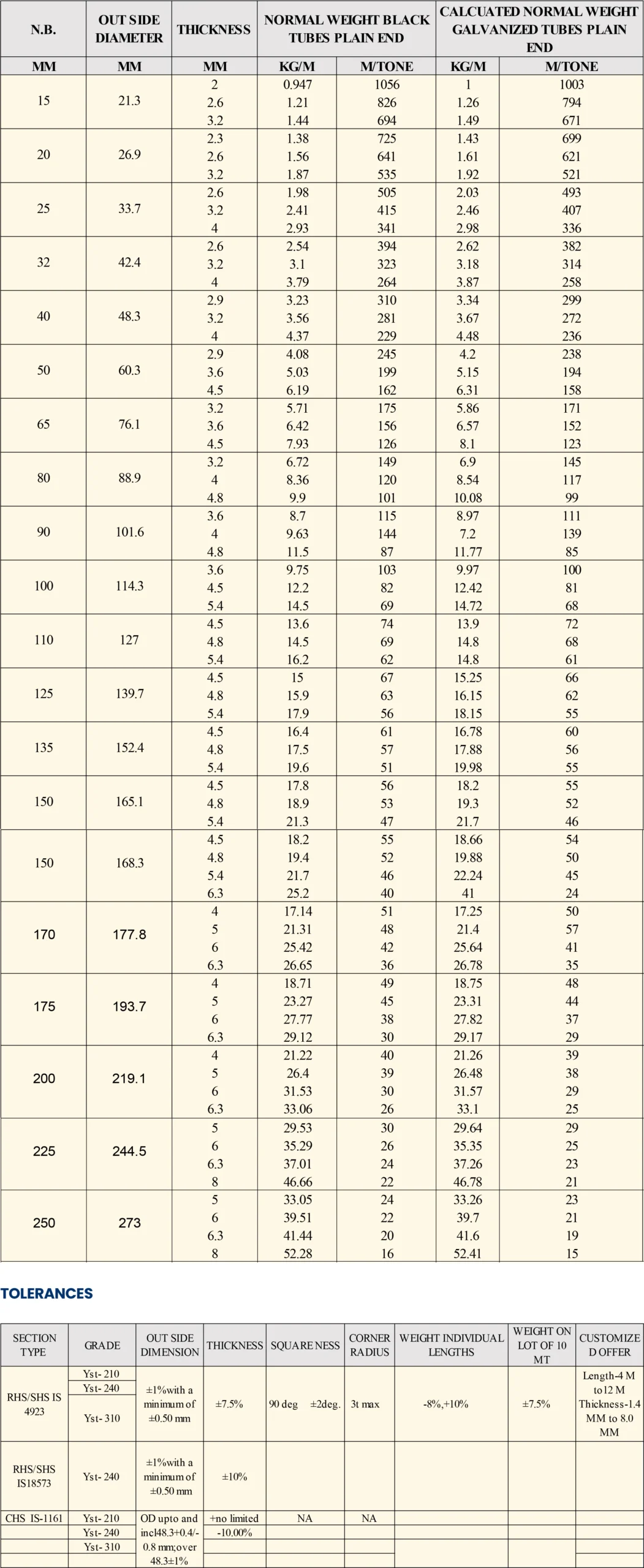
ERW steel tubes for ordinary uses in water, gas and air lines conforming to IS 1239 (Part 1):2004, corresponds to BS 1387:1985
ERW steel tubes for mechanical and general engineering purpose IS 3601:2006
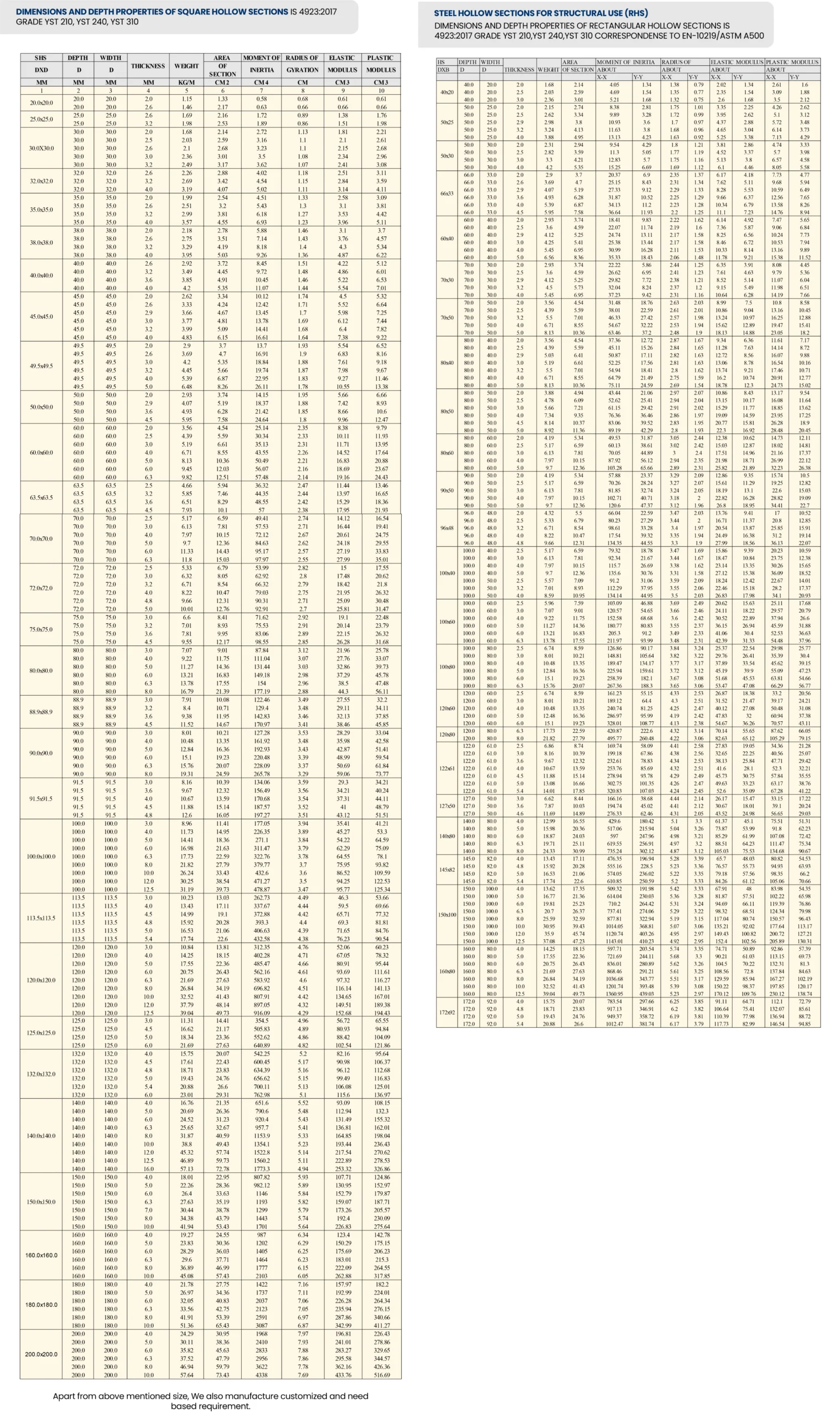
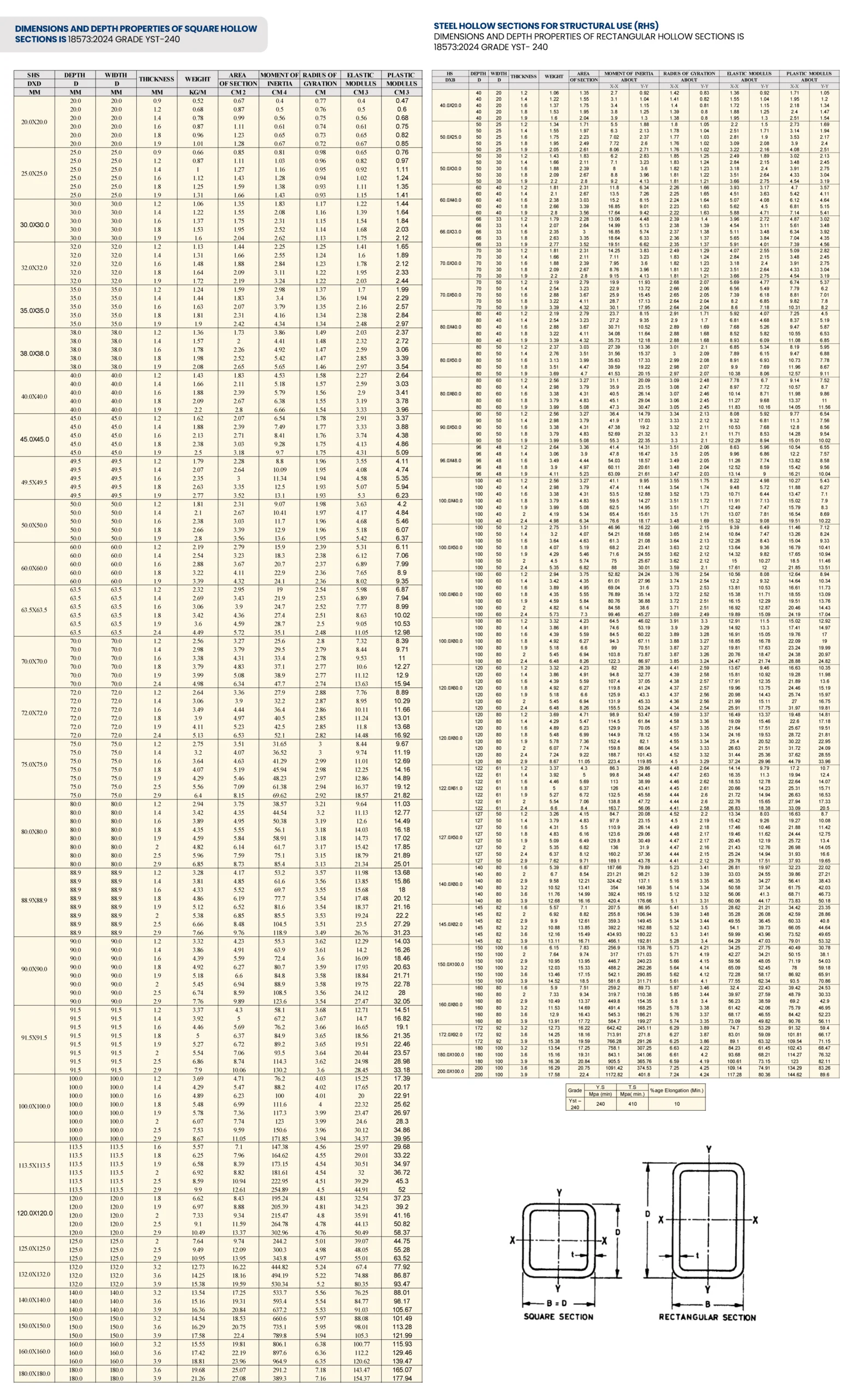
Dimensions and depth properties of square hollow sections IS 4923:2017 grade YST 210, YST 240, YST 310
Steel tubes for structural purposes conforming to IS 1161:2014
Dimensions and depth properties of square hollow sections IS 18573:2024 grade YST 240
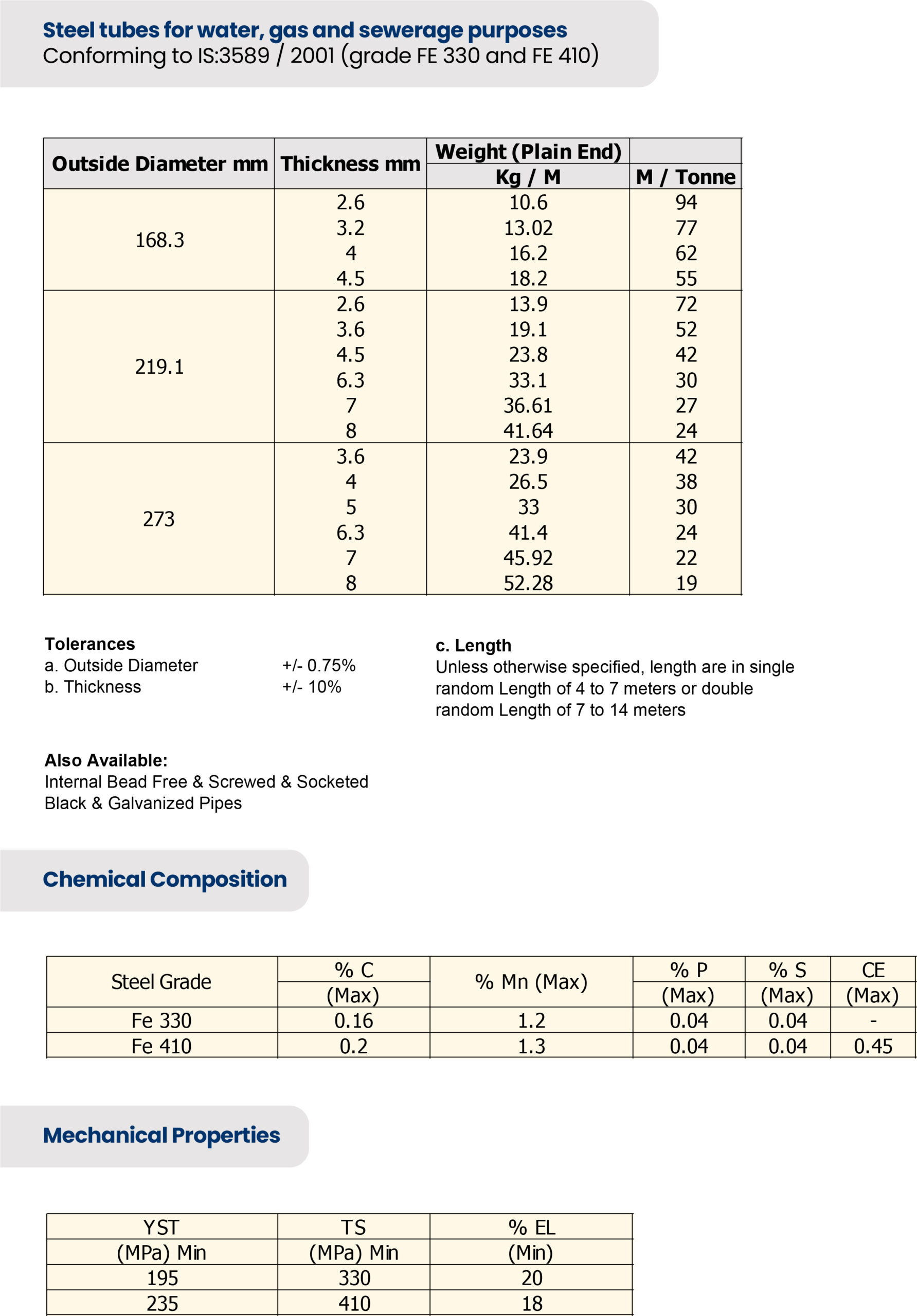
Steel tubes for water, gas and sewerage purposes
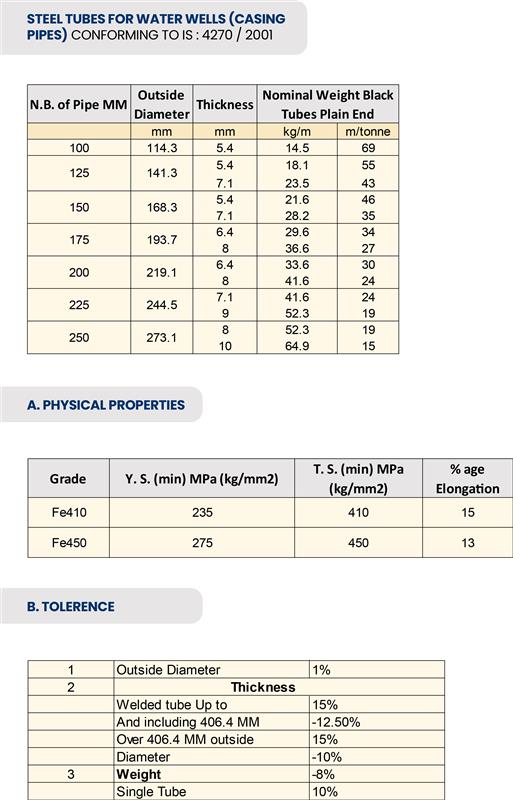
Steel tubes for water wells (casing pipes)
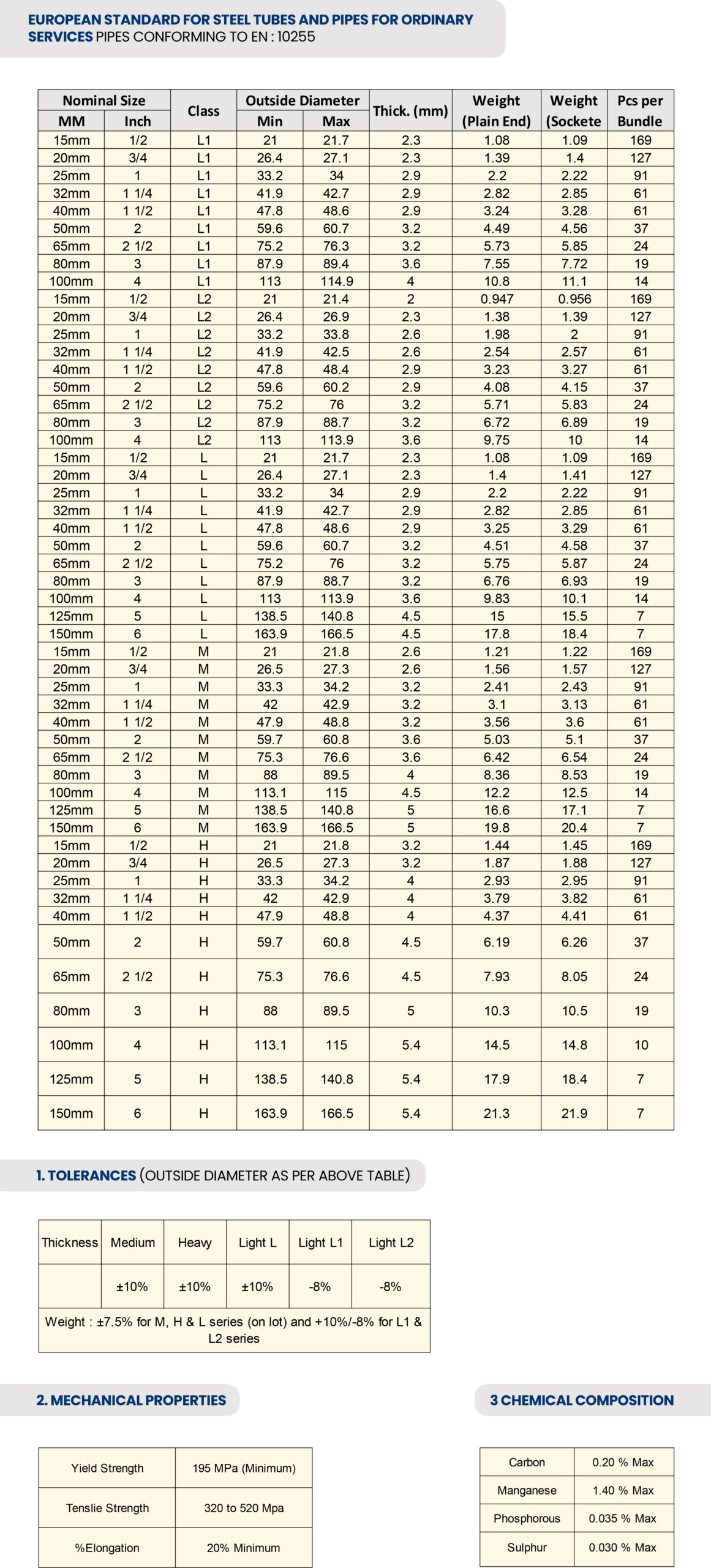
European standard for steel tubes and pipes for ordinary services
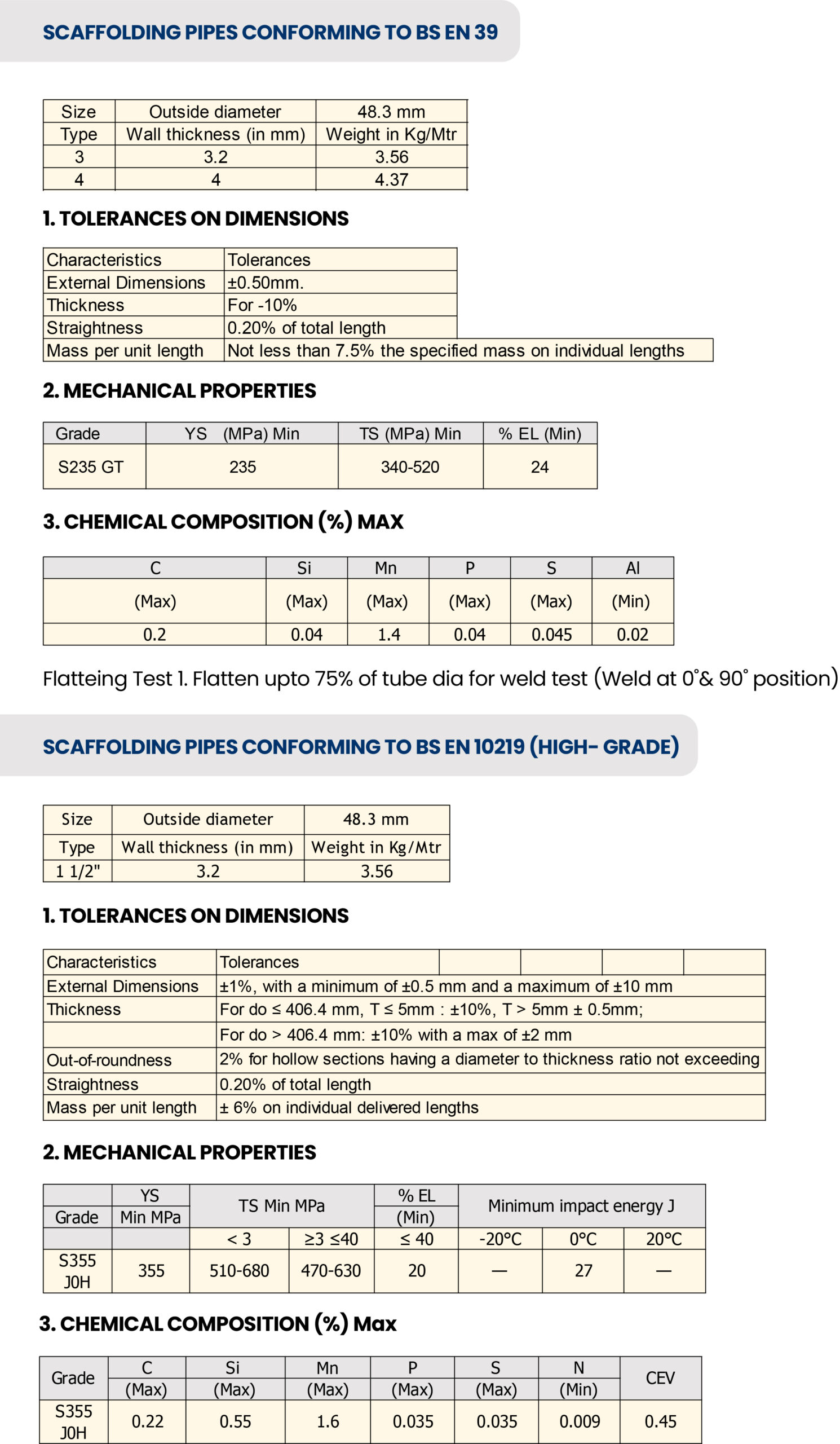
Scaffolding pipes conforming to BS EN 39
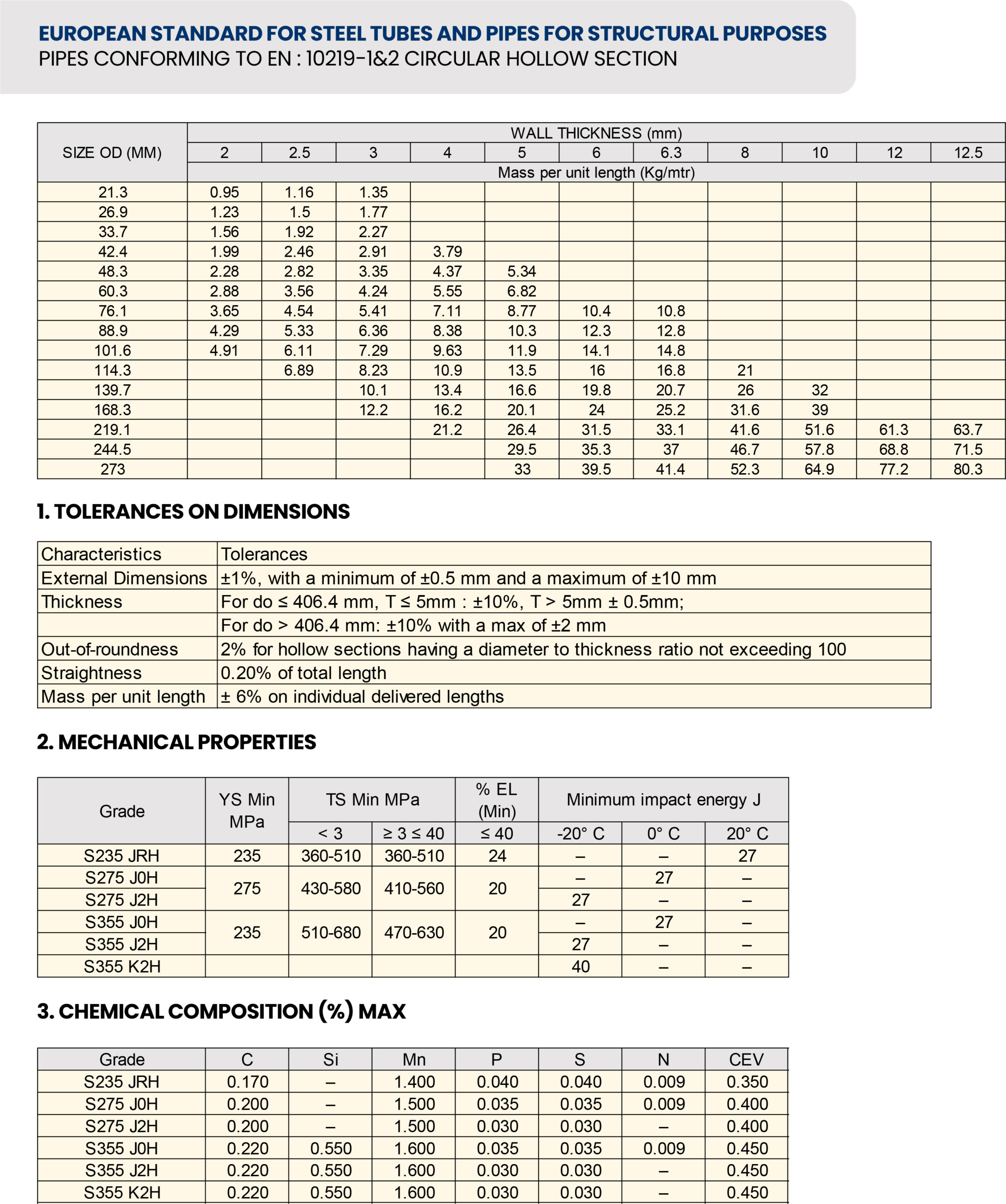
European standard for steel tubes and pipes for structural purposes
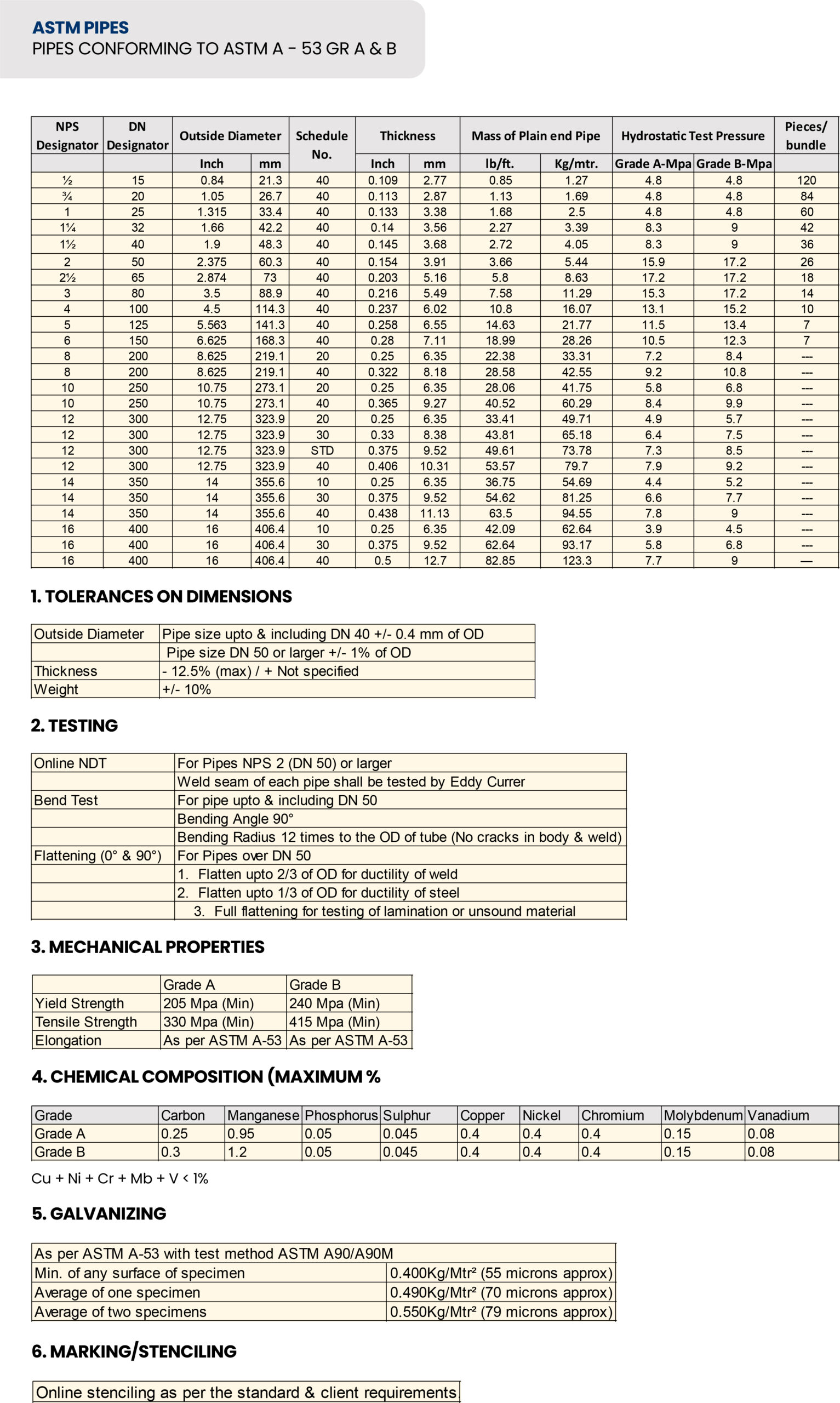
ASTM pipes
ASTM pipes
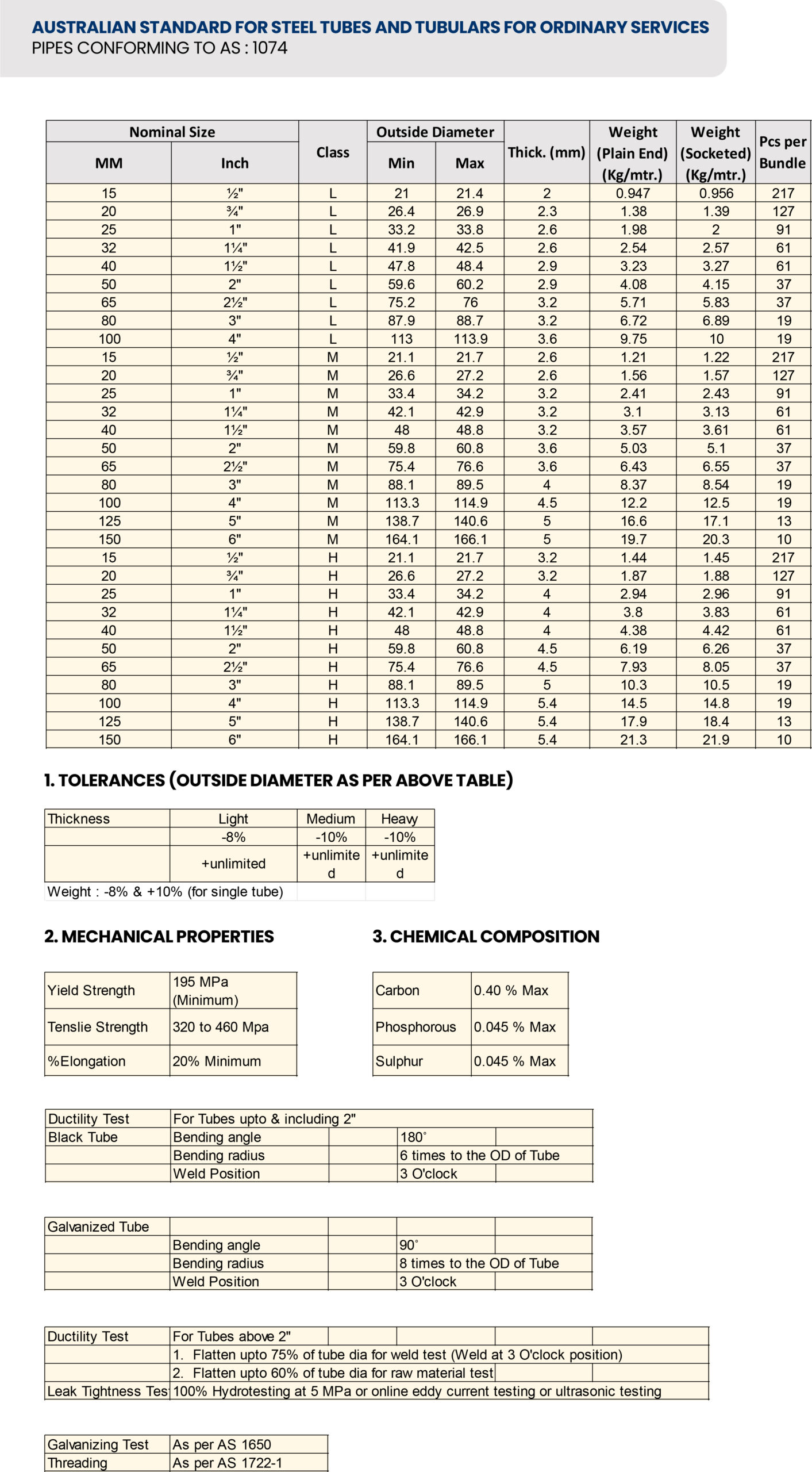
Australian standard for steel tubes and tubulars for ordinary services

ERW Steel Tube FAQs

Looking for reliable ERW steel tube manufacturers in India? Explore our range of ERW tubes manufactured to meet industry standards.

1. What does ERW mean?

Electric resistance welded. The tube is made from steel strip, formed, and its edges welded by electric current and pressure without filler metal.

2. What is the difference between ERW and seamless pipe?

ERW pipe is formed from flat steel strip that is rolled into a round and welded along one seam. Seamless pipe is pierced and drawn from a solid steel billet, so it has no weld seam.

  • Cost: ERW is cheaper and quicker to make; seamless costs more.
  • Size accuracy: ERW is made from rolled strip with tight control over wall thickness and diameter.
  • Pressure: seamless is generally chosen for very high-pressure, high-temperature or critical service; modern ERW with seam normalizing is widely used for water, fire, gas distribution and structural work.
  • Typical use: ERW for structural, water, mechanical and general engineering; seamless for boilers, high-pressure and process lines.

If your specification demands seamless, ERW is not a substitute. For most structural, water and general engineering jobs, ERW meets the requirement at lower cost.

3. What sizes of ERW steel pipe do you make?
  • Round: OD from 21 mm to 273.1 mm
  • Square hollow sections (SHS): 16 x 16 mm to 200 x 200 mm
  • Rectangular hollow sections (RHS): 26 x 13 mm to 250 x 150 mm
  • Thickness: 1.20 mm to 8.0 mm
  • Length: 3.5 m to 7.5 m

Not every thickness is made in every size, so send us your size and wall thickness and we will confirm availability.

4. What do YST 210, YST 240 and YST 310 mean?

YST stands for yield strength tube, the grade designation used in Indian standards for steel tubes such as IS 4923 and IS 1161. The number is the minimum yield strength of the steel in MPa (N/mm²). So YST 210 has a minimum yield strength of 210 MPa, YST 240 has 240 MPa and YST 310 has 310 MPa.

A higher number means a stronger tube, which lets a structural designer use a lighter section for the same load. Your structural engineer's drawing will state the grade; if it does not, ask before ordering.

5. Can ERW tubes be used for water pipelines?

Yes. ERW pipe made to IS 1239 (Part 1) or IS 3589 is intended for water, gas, steam and air lines and is used for plumbing, water mains, sewerage, treatment plants and firefighting lines.

Black (uncoated) pipe will rust over time if exposed to water and air, so for drinking water, buried or outdoor lines, or corrosive conditions, a galvanized pipe or a protective coating is the better choice. Black pipe is common for fire sprinkler and closed-loop systems. See our GI pipes if you need zinc-coated pipe.

6. Which ERW pipe is used for scaffolding and structures?
  • Scaffolding: tubes made to BS EN 39. The common scaffold tube is 48.3 mm OD (40 NB, 1-1/2 inch), usually in 3.2 mm or 4.0 mm wall.
  • Round structural tube: IS 1161 (Avon holds a BIS licence), or EN 10219 for CE-marked structural hollow sections.
  • Square and rectangular sections: IS 4923 (grades YST 210, 240, 310) and EN 10219, used for frames, trusses, sheds, gates and furniture.
  • Poles and towers: IS 1161 and IS 4923 as specified by the design.

Tell us the load, span and drawing requirement and we will suggest the standard, grade and wall thickness.

7. How do I calculate the weight of an ERW pipe?

For a round tube, use this formula:

Weight (kg per metre) = (OD − wall thickness) × wall thickness × 0.02466 (OD and thickness in mm)

Example: a 60.3 mm OD pipe with 3.2 mm wall: (60.3 − 3.2) × 3.2 × 0.02466 = 4.51 kg per metre, which matches the chart above. For a 6 m length, that is about 27 kg.

For square and rectangular tubes, a close estimate is: weight (kg per metre) = 0.00785 × wall thickness × (a + b − 2 × wall thickness) × 2, where a and b are the outer side lengths in mm; corner radii make the actual weight slightly lower. Formulas give theoretical weight; actual weight varies within the tolerance in the standard. Use our weight chart for common sizes.

8. Do you supply ERW pipe in Punjab and across India?

Yes. We manufacture in Ludhiana, Punjab, and supply dealers, fabricators and project buyers across Punjab, India and export markets. Send your delivery location with your enquiry and we will confirm freight and delivery time.

9. What affects ERW pipe price?
  • Steel price: mainly the cost of hot-rolled coil, which changes with the market.
  • Size and wall thickness: more steel per metre costs more.
  • Grade and standard: structural grades (YST 310) and certified products such as CE-marked EN 10219 can cost more than general-purpose tube.
  • Finish and ends: black, oiled, painted, plain or bevelled ends, special lengths.
  • Quantity: bulk orders and standard lengths get better rates.
  • Testing, certificates and freight: inspection requirements and delivery distance.
  • Taxes: GST is charged as applicable.

Send us your size, thickness and quantity for a written quote.

10. What is the minimum order quantity and dispatch time?

Minimum order quantity and dispatch time depend on size, thickness and the current production plan. Send your requirement and we will confirm quantity and delivery date in your written quote.

11. What are ERW pipe sizes in inches?

ERW pipe is sold by nominal bore (NB) in inches, which is not the real outside diameter. The sizes in our weight chart are:

InchNB (mm)OD (mm)
12533.7
1-1/24048.3
25060.3
38088.9
6150168.3
10250273.1

Other common sizes: 1/2 inch (15 NB, OD 21.3 mm), 3/4 inch (20 NB, 26.9 mm), 1-1/4 inch (32 NB, 42.4 mm), 2-1/2 inch (65 NB, 76.1 mm), 4 inch (100 NB, 114.3 mm), 5 inch (125 NB, 139.7 mm) and 8 inch (200 NB, 219.1 mm). Tell us the inch size and wall thickness you need.

12. What is the difference between ERW black pipe and GI pipe?

ERW black pipe is supplied uncoated, as made, with the dark mill finish. GI pipe is an ERW pipe that has been hot-dip galvanized, which covers it with a zinc layer that resists rust.

  • Corrosion: GI resists rust in water and outdoors; black pipe needs paint or another coating if it will be exposed.
  • Cost: black pipe is lower in price; GI costs more because of the zinc coating.
  • Best for: black for structural frames that will be painted, fabrication, fire sprinkler and closed systems; GI for drinking water, outdoor, irrigation and corrosive environments.
  • Welding: black pipe welds easily; GI can be welded but the zinc coating burns off and gives off fumes, so use good ventilation and re-coat the weld area.

Avon Steel makes both: black ERW tubes and hot-dip galvanized GI pipes from the same ERW mills.

Buy ERW Steel Tubes Direct from the Manufacturer

Avon Steel Industries Private Limited, Phase VIII, Focal Point, Chandigarh Road, Nichi Mangli, Ludhiana 141010, Punjab, India.

+91-161-5210100  |  WhatsApp +91-99148-08900  |  info@avonsteel.com

Related products and guides

Built for reliability and efficiency, Avon Steel's ERW steel tubes offer unmatched quality for diverse industries.
Contact us today to explore our range!

×

    Contact Us Today

    Submit the form below or contact us at 9914808900 / info@avonsteel.com for a competitive quote!